View from window in Mont Saint Michel, France.

The 

Phonics 

Page

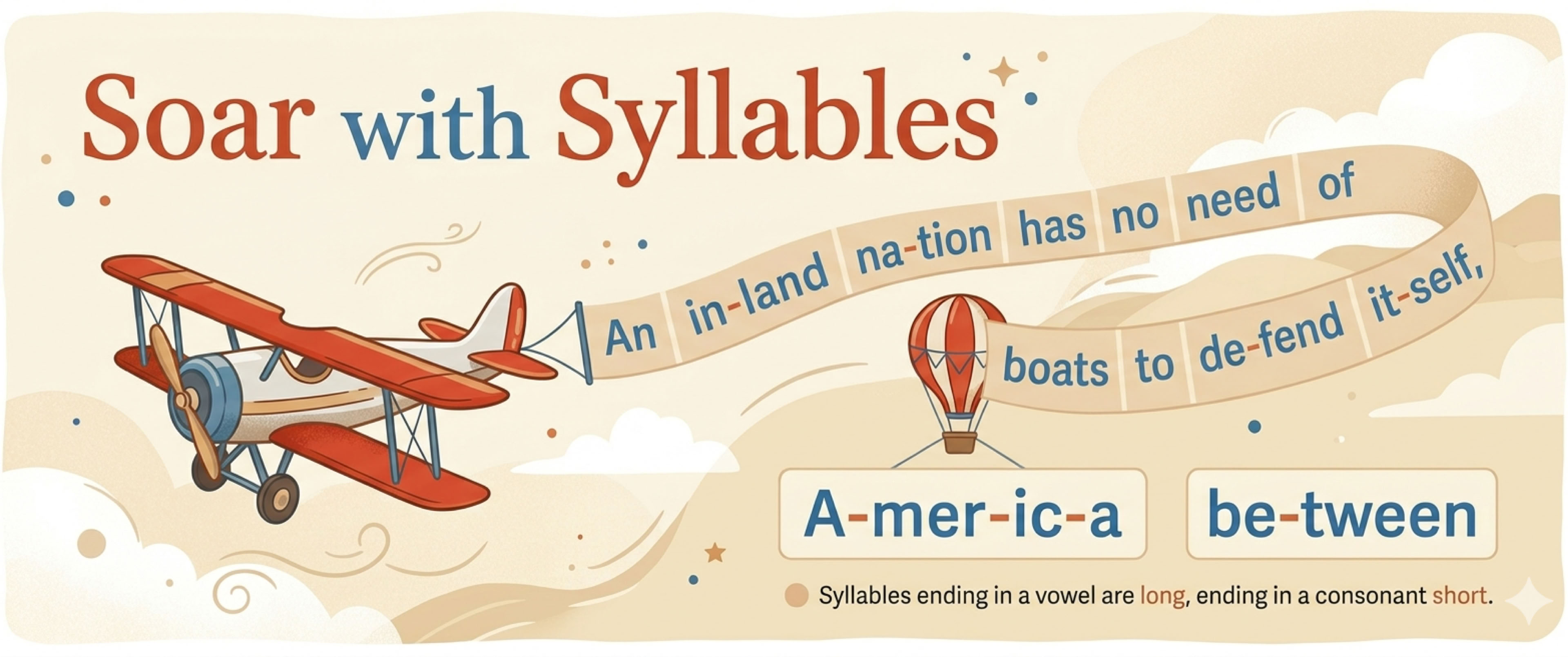
Banner says "Soar with Syllables," has examples of syllable divided words to aid reading such as be-tween, na-tion

Syllable Divided Books.


In the 1700s and early 1800s, students were typically taught using a syllabary and a speller, such as Webster’s Blue-Backed Speller. This method teaches reading using syllabic phonics. Our Webster’s way page explains this method in detail. By the time they completed the speller, students could generally read well enough to tackle any text—often their first was the King James Bible. 


After mastering spelling, students would progress to a reader, where words were sometimes divided into syllables to aid decoding. Parker’s First Reader is an example of such a syllabicated text. By the late 1800s, many stand-alone books were published in this style, often with titles including the phrase "In Words of One Syllable” or “Words of Easy Syllables.”


Words with 2 or more syllables were divided to make them easy for children to pronounce, instead of typical dictionary division. Syllables that end in a vowel were pronounced with a long vowel sound, syllables that ended in a consonant were pronounced with a short vowel sound. 


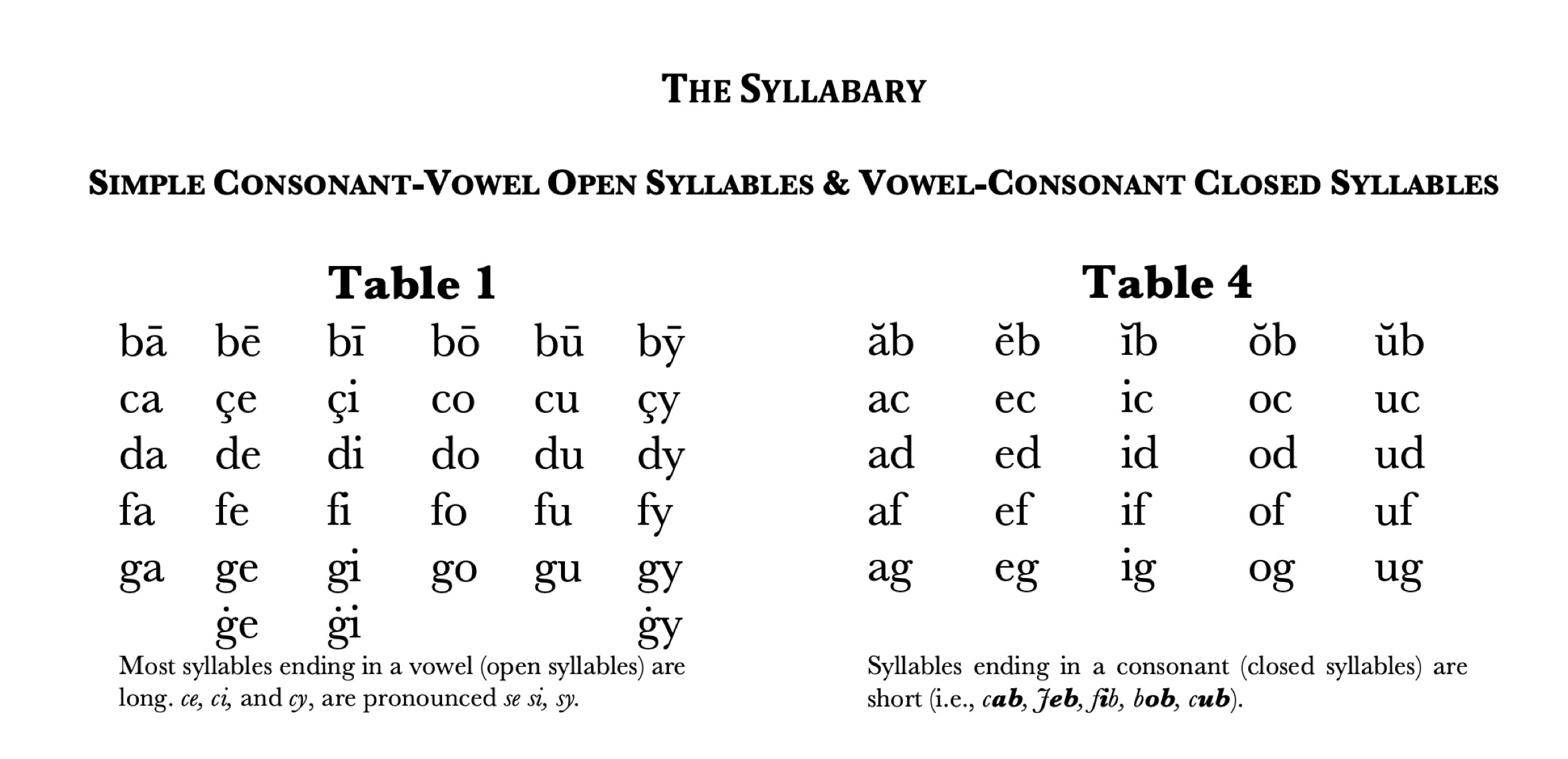
After being taught basic syllables such as those shown in the excerpted Syllabary from Webster’s Speller below, students would be given words with syllables divided according to their pronunciation. The syllable divided words were divided to match the teaching in the syllable tables in the syllabary. 


For example, the dictionary will divide the word “rabbit” as “ra-bit” to show the consonant “b” as pronounced with the 2nd syllable, but spellers and syllable divided books divide it as “rab-bit” to help children pronounce the word with its short vowel sound.


    Speller division: rab-bit 

    Dictionary division: ra-bit 


Excerpts from Noah Webster’s Syllable Tables,

“The Syllabary”

Noah Webster’s son, William G. Webster, in his 1866 revision of his father’s Blue-Backed Speller, “The Elementary Spelling Book,” explains:


In Syllabication it has been thought best not to give the etymological division of the Quarto Dictionary, but to retain the old mode of Dr. Webster as best calculated to teach young scholars the true pronunciation of words. 


The plan of classification here executed is extended so as to comprehend every important variety of English words, and the classes are so arranged, with suitable directions for the pronunciation, that any pupil, who shall be master of these Elementary Tables, will find little difficulty in learning to form and pronounce any words that properly belong to our vernacular language.


-W. G. W.       New York, 1866.

These “Elementary Tables” were also known as a syllabary. Excerpts from Noah Webster’s syllabary are shown in the picture above. They were a guide to pronouncing later syllable divided words. The syllabary and its use are explained on our Webster’s way page.


After students mastered the syllabary and speller tables, some readers began with words divided into syllables. These books then gradually transitioned into regular, undivided text as the students learned to divide syllables on their own and matured in their reading skills. Examples:


Abbott's First Reader by Jacob and John Abbott


Tropical Reading Books by Eliza Caroline Phillips


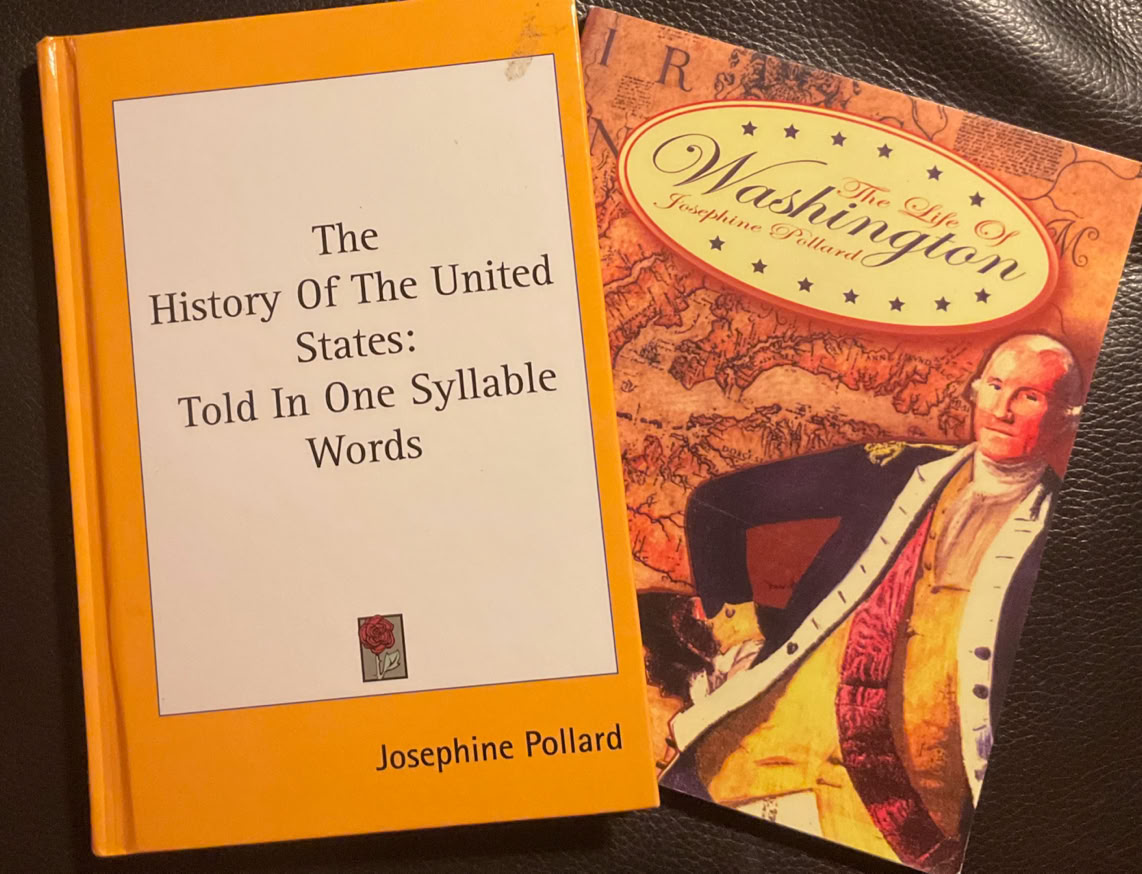
These syllable divided books are useful for both beginner and remedial readers. Reprints of Josephine Pollard’s one-syllable books, The Life of Washington and The History of the United States, are available on Amazon.


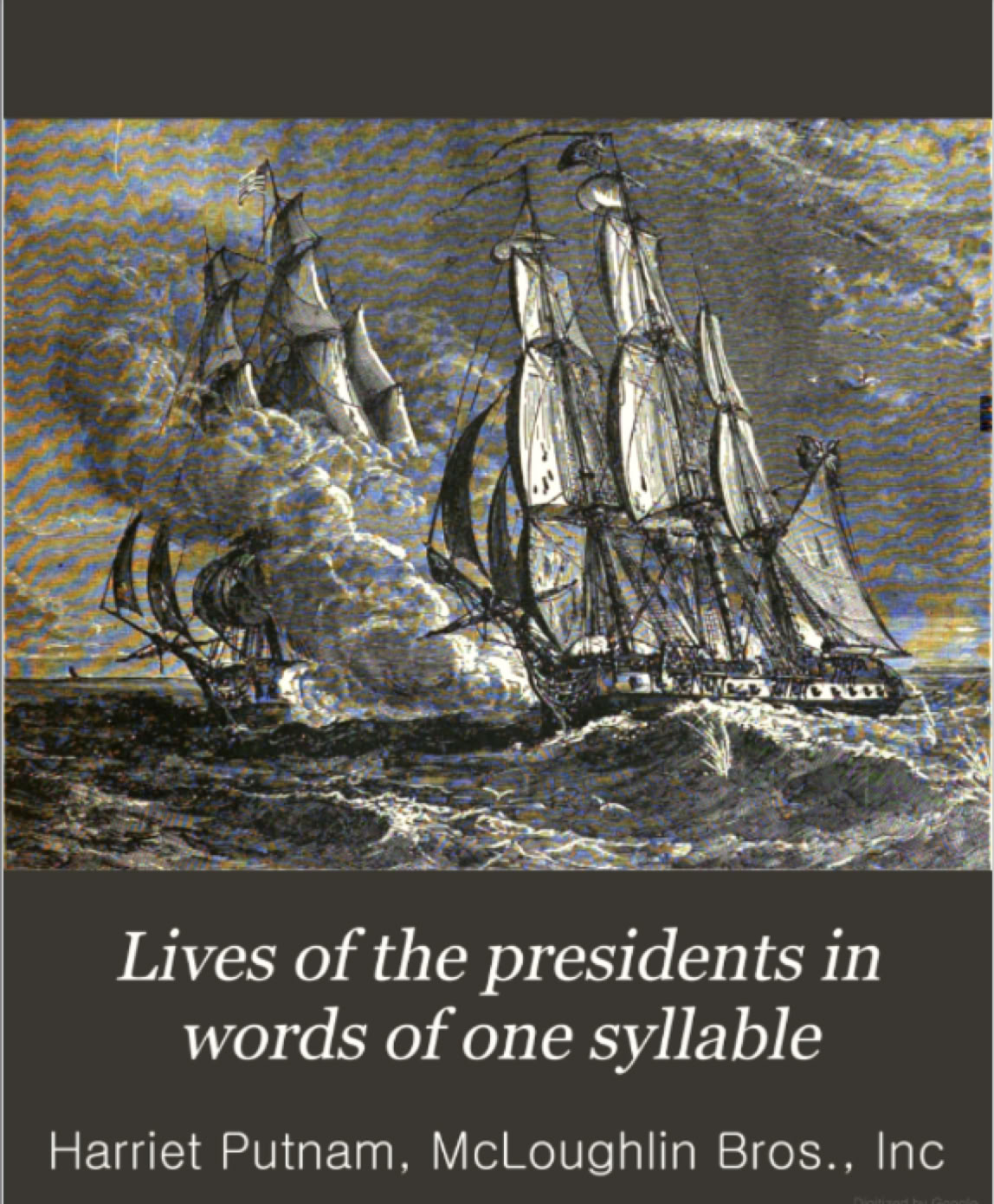
For free options, you can download and print several one-syllable books from Google Books. One standout is Lives of the Presidents—it’s informative, and you can print sections for one or two presidents at a time.


Parker’s First Reader, 

Lesson VI.

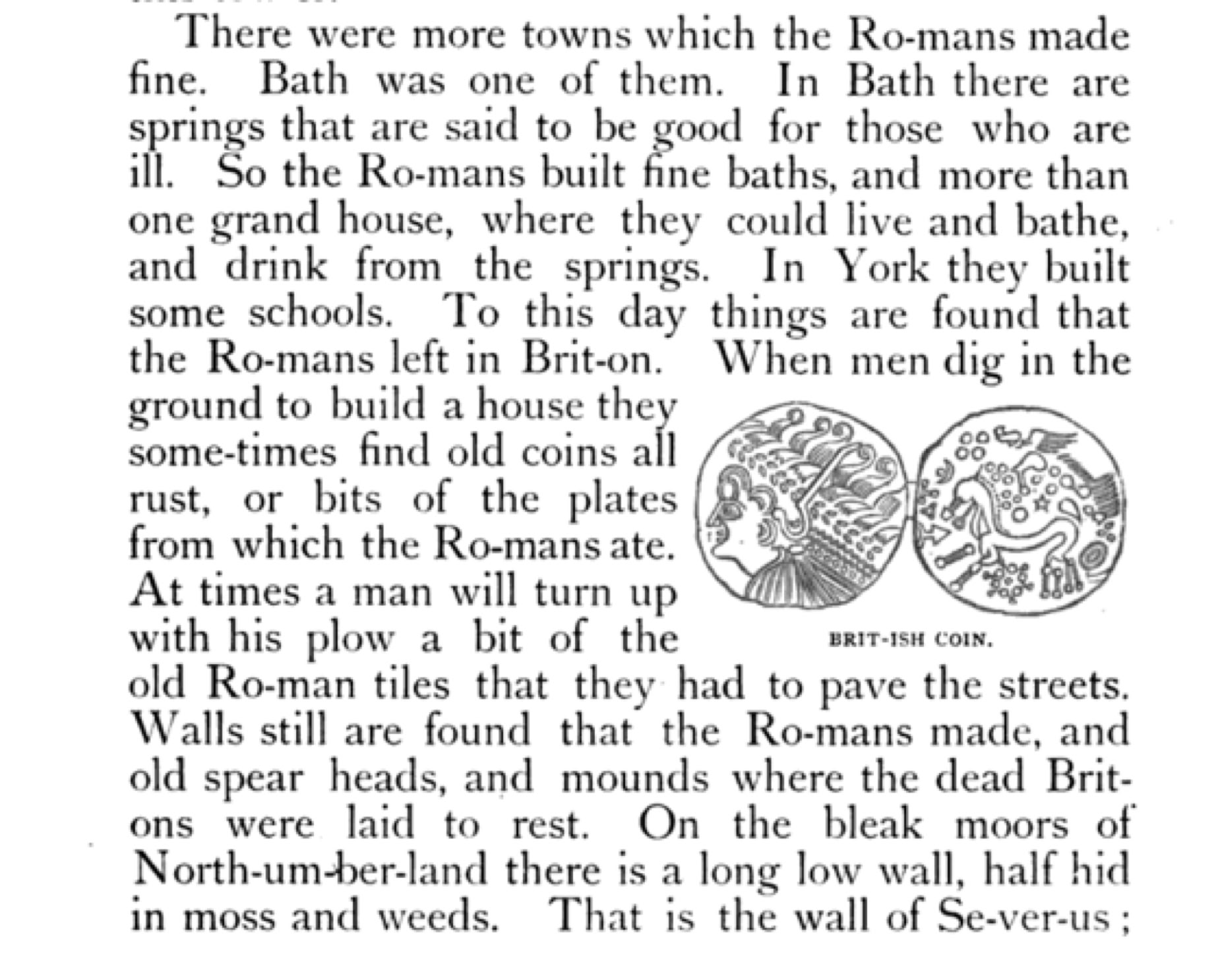
History of England in Words of One Syllable, page 19

Can you make a pic-ture of a sound?

I do not think a pic-ture of a sound can be made.

O yes, it can; and this book is full of the pic-tures of sounds.

The pic-ture of a horse looks like a horse, and the pic-tures of a house and a cow look like a house and a cow.

Does the pic-ture of a sound look like a sound?

No, the pic-ture of a sound does not look like a sound. We can-not see a sound, and do no know how a sound looks.

How, then, can we make a pic-ture of a sound, if we do not know how a sound looks?

I will tell you. I have just told you that this book is full of pictures of sounds; and I will show you one of these pic-tures.

What is this?

         f

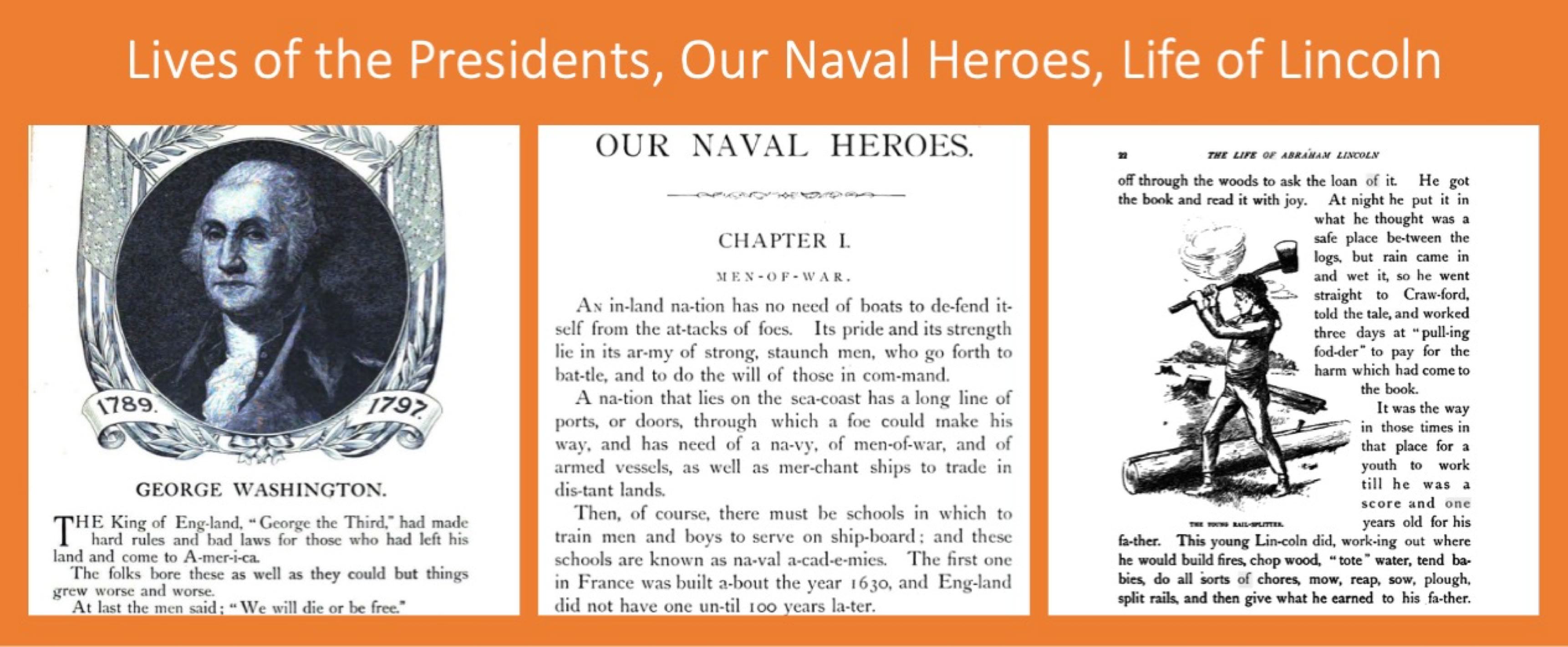
Lives of the Presidents, Our Naval Heroes, Life of Lincoln, pictures from these syllable divided books

We hope these syllable divided books will continue to educate and inspire students of all ages. 

They are an interesting part of the history of reading and education. 

Our free Syllables Spell Success lessons can help you learn to read words syllable by syllable, 

 the same way reading was taught in the age of syllable divided books.


The Phonics Page is a ministry of 40L.

©️ 2026 by 40L.